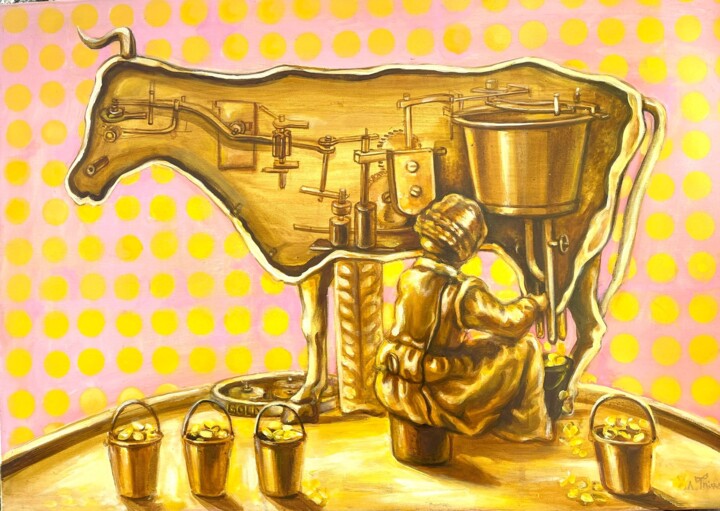
A Confession
Beneath the surface of my spiritual life lurks a mostly hidden fear: fraudulence. Not the Machiavellian, power-hungry kind. Nor the prosperity-gospel, in-it-for-the-money kind. I'm neither calculated nor shrewd enough to pull off those stunts.
But I am capable of consistently doing the right things for God for the wrong reasons. I can praise His name and treasure Something else. Like the Israelites who kept offering the temple sacrifices while their hearts were far from God (Isa. 29:13), I can check my religious box while my heart wraps itself around other things.
If spiritual fraudulence were an illness, it would have only mild visible symptoms. You might not detect it without a good X-ray. That's where Isaiah 57 comes in.
Idols: the Twinkie gods
Isaiah 57 is about idols. If you don’t know what those are, here’s an introduction from Tim Keller:
“An idol is anything more important to you than God, anything that absorbs your heart and imagination more than God, anything you seek to give you what only God can give.” (Counterfeit Gods, xx.)
Idols during Isaiah’s time were hand-crafted representations of a god who specialized in fertility, security or just about anything else you could want. Most gods were local. Ba’al (see below) was the god of rain. Ba’al’s blessing was a matter of life and death for an agricultural society like Israel’s.
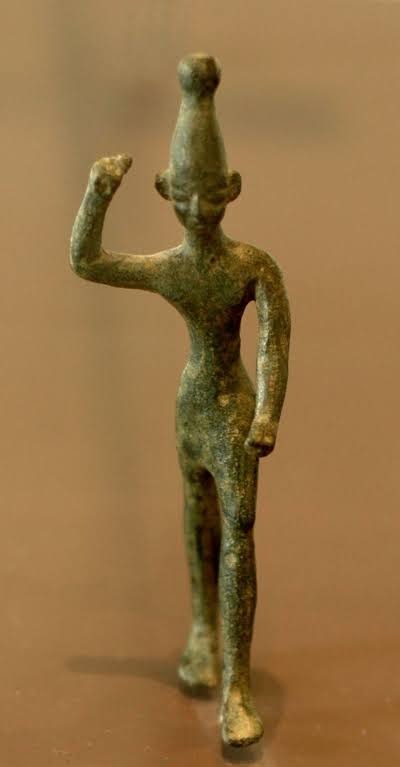
One's relationship with Ba’al, like other idols of the time, was transactional. You present your offering—either something tangible like your crop or something intangible like bowing down in worship—and he gives you what you want. Ba’al doesn’t really care if you like him or not, he’s in it for the money and the clout.
A piece of good news: today there are more shoppers at your average suburban Costco than Ba’al-worshippers in the entire world. Nevertheless, we continue to worship things that aren’t God: good things like a family or a job, neutral things like a football team, or bad things like demonic cults.
You do not want to worship an idol. Sadly, John Calvin suggested that we almost always do. Indeed, our hearts are manufacturing idols at Amazonian rates of production. The good news, though, is that Isaiah 57 can help you identify the issue and then remedy it.
The Idol Identification Test: 3 Questions
Question 1
What do you burn for?
Isaiah says that Israel “burned with lust” (Isa. 57:5) for her false gods. “On a high and lofty mountain, she set her bed.” (Isa. 57:7) She “loved their bed.” (Isa. 57:8) She “looked on their nakedness.” (Isa. 57:8)
The sexually charged language here—(hard to miss!)—could be due to the fact that many in Israel frequented the local fertility cults where worship literally involved “setting a bed.” However, God likens idolatry to adultery throughout the Old Testament for several reasons.
First, affairs make liars; they bear an “offspring of deceit.” (Isa. 57:4) The phrase Isaiah uses here does not just mean you lie a lot, but that you’ve begun to lie to yourself. You’re in denial. You have birthed lies and they now have birthed you. Second, affairs require secrecy. They happen “behind the [closed] door” (Isaiah 57:8a). Third, an affair exchanges a long-term commitment to satisfy an immediate and overwhelming desire.
So what do you burn for? Behind closed doors, after a long day, what are you thinking about? What desires tempt you away from your long-term commitments?
Question 2
Gods, then and now, require sacrifice. “To them, you have poured out a drink offering, you have brought a grain offering…on a high and lofty mountain you have set your bed, and there you went up to offer sacrifice.” (Isa. 57:6-7)
In Israel’s world of widespread food insecurity, to offer wine and grain is no small thing. Drink offerings and grain offerings acknowledged a god for his blessing on your work. (Without the gods' rain, you get no food.) Isaiah’s issue is not that Israel is making sacrifices, but that they are sacrificing to false-gods.
Beyond their produce, Israel gives idols their energy and effort. They “weary themselves” by travelling to neighboring nations and their gods to seek protection because they don’t believe God is up to the task.
At bottom, Israel doesn't think twice about this significant investment because they believe that the idols will “deliver them” (Isa. 57:13) from their greatest problems. Those were twofold: provisions for their fields and protection from their enemies. A full granary and a secure border was heaven on earth, a salvation worth sacrificing for.
Ironically, God promises to provide those blessings for them, but they don't believe Him so they had to work for it themselves. And then they burned out with exhaustion.
So… what wearies you? What are you working for that God has already promised you?
Question 3
Just when you thought it couldn't get any worse, Israel “slaughters their children” (Isa. 57:5) as a sacrifice to idols. God promises His people He won’t ever ask for child-sacrifice; in fact, He completely condemns it (Leviticus 18:21; Jeremiah 7:31,19:5).
But Israel’s idols demand more and give less than God Himself. That’s their DNA. To quote the fictional demon Screwtape, “an ever-increasing craving for an ever-diminishing pleasure” is the formula. Addictions. Compulsions. Idolatry. The worst manifestations of human behavior follow that formula.
Idols are self-chosen tyrants. They’re illegitimate leaders. They didn’t create or save or redeem us like God has, yet they take our money, steal our energy, drain our joy, and demand we sacrifice our most cherished blessings. Worst of all, we let them do it.
Who, or what, are you letting steal your most precious blessings?
God’s Response
I’m going to quote in full here because it’s a genuine twist:
“Build up, build up, prepare the way,
remove every obstruction from my people's way.”
For thus says the One who is high and lifted up,
who inhabits eternity, whose name is Holy:
“I dwell in the high and holy place,
and also with him who is of a contrite and lowly spirit,
to revive the spirit of the lowly,
and to revive the heart of the contrite.
For I will not contend forever,
nor will I always be angry;
for the spirit would grow faint before me,
and the breath of life that I made…
I have seen his ways, but I will heal him;
I will lead him and restore comfort to him and his mourners.” (Isa. 57:14-18)
Consider the reversals here. Israel travelled far and wide for their false gods. The true God promises to "remove every obstruction from my people's way." (v. 14) Israel went up mountains to pursue the little tyrant gods; the High and Holy God promises to dwell with "the lowly." (v. 15)
The true God promises to "remove every obstruction from my people's way." (v. 14)
And when we consider Jesus, the picture gets clearer and even more astonishing.
While we burned with lust for our idols, Jesus was the Fourth man in the Fire who burned for us. (Dan. 3:25)
While we wore ourselves out to the point of exhaustion serving false gods, Jesus wearied Himself to the point of sweating blood in the Garden to serve us. (Luke 22:44)
While we offered up our own children on the mountain, Jesus is the Son who offers Himself up on the mountain for us. (Hebrews 9:14)
Jesus, the High and The Holy One, came down to earth and removed every obstruction between us and God. (v. 14, 15)
Jesus saw our ways, a bunch of helpless sheep without a shepherd and still "bore our diseases up in His own body on that tree" so that "by his wounds we are healed." (Matt. 8:17, 9:36;1 Peter 2:24)
Jesus was the object of God's anger on that fateful day when the sky went dark for three hours so that we would not have to endure His wrath and instead be welcomed into the New Heavens and Earth where He Himself would be our light forevermore. (Isa. 53:10; Matt.27:45; Rom. 5:9; Rev. 21:23)
Don't you see? There is nothing that a job or relationship or achievement can give you that Jesus hasn't already suffered and gave His own life to win for you. And for me, too.
And with regards to initial fear of fradaulence, the words from John Wesley's hymn ring loud and clear.
"Jesus, the name that charms our fears,
that bids our sorrows cease,
Tis' music in the sinners ears
Tis' life and health and peace."

Lakelight Monthly
Curated resources, delivered on the last Saturday of the month.
By subscribing you agree to with our Privacy Policy and provide consent to receive updates from our company.